If you are considering Weston, one of the first things you may notice is that this is not a town of tight lots and dense blocks. Weston is known for larger parcels, a residential feel, and substantial open space, which can be a major draw if you value privacy and room to spread out. This guide will help you understand what buyers typically see in Weston homes and land, what affects value and usability, and what to look for before you make a move. Let’s dive in.
Weston’s Homes and Land at a Glance
Weston is a small, mostly owner-occupied residential town in Fairfield County. The Census estimates a July 2025 population of 10,517, with a 96.9% owner-occupied rate and a median owner-occupied housing value of $996,700 for 2020 through 2024.
The town itself describes Weston as a residential community with minimal commercial development, two-acre property zoning, and abundant open space. That overall character shapes what you should expect when you start touring homes or looking at land parcels here.
Larger Lots Are the Norm
One of the most important things to know about Weston is that its zoning pattern strongly favors larger parcels. In the primary residential and farming district, the minimum lot area is two acres, minimum frontage is 170 feet, and maximum building coverage is 15%.
That means many homes sit on wooded lots with more separation from neighbors than you might find in nearby towns. You will often see long driveways, mature trees, stone walls, decks, pools, and natural landscape features as part of the setting.
Why Two Acres May Feel Different in Practice
A two-acre lot does not always mean two fully usable acres. Weston’s zoning code does not count certain areas the same way for minimum lot calculations.
For example, roads, rights-of-way, certain easements, water, and very poorly drained soils may not fully count toward the minimum lot area. In real terms, that means the usable yard, building envelope, or expansion potential can feel smaller than the gross acreage suggests.
Are Smaller Lots Available in Weston?
Yes, but they are less common. Weston’s Village District includes a one-acre minimum lot pattern, which is smaller than the town’s standard two-acre framework.
Still, that is more the exception than the rule. If you are looking in Weston, it is smart to expect larger-lot living first and treat smaller parcels as a narrower part of the market.
What Home Styles You’ll Commonly See
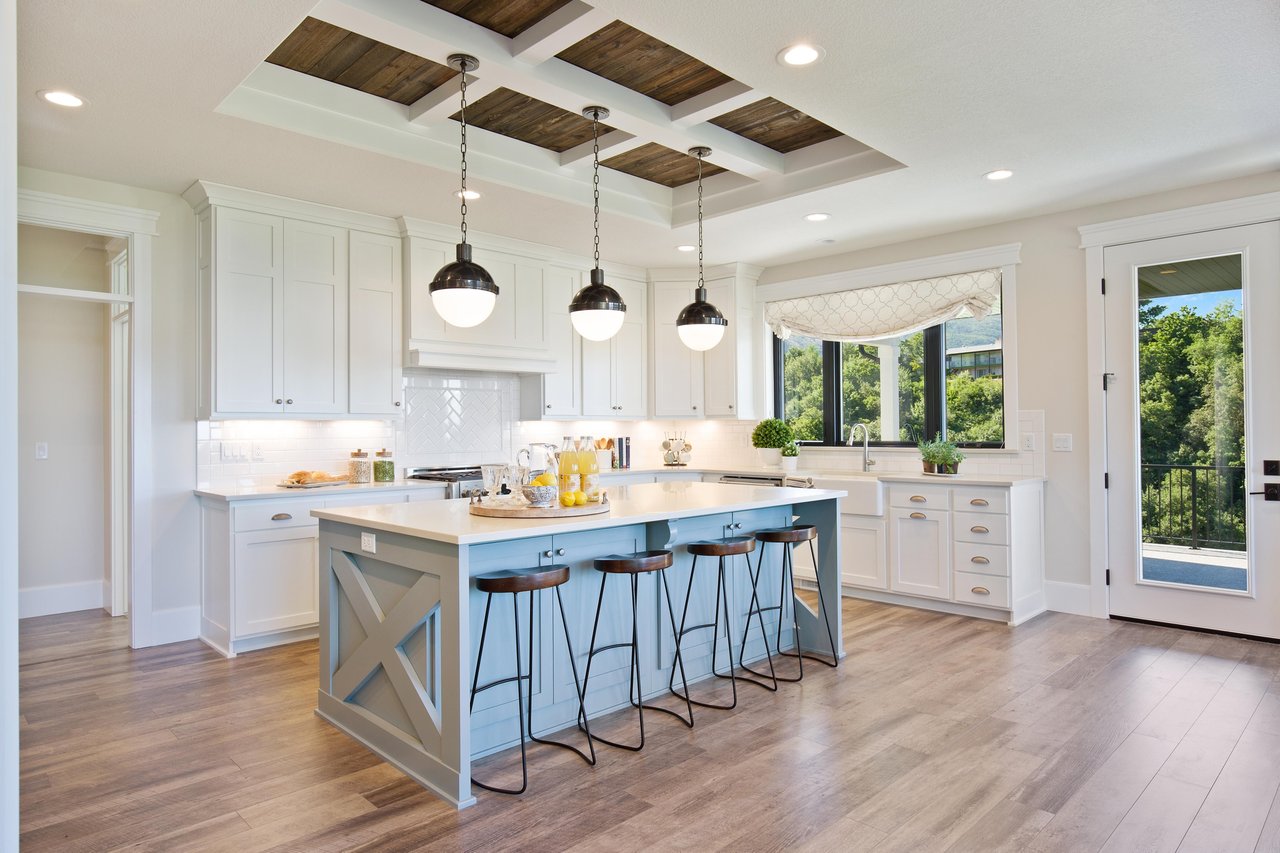
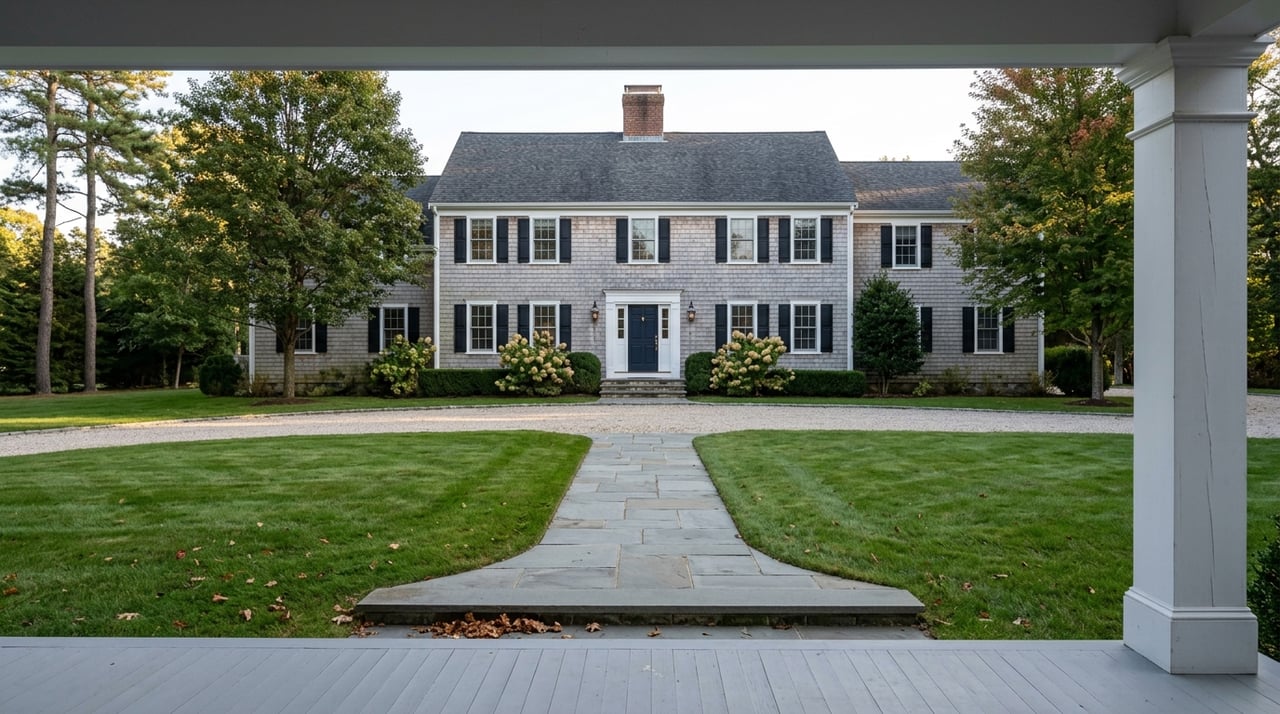
Weston does not have just one home style, but the market tends to feel visually consistent because of its lot sizes and wooded settings. Public listings show colonials and contemporary homes especially often, along with ranches, raised ranches, and some farmhouse-style properties.
That mix gives buyers a range of options. You may find an older colonial on a substantial lot, a mid-century contemporary with walls of glass, or a ranch-style home with one-level living and room for updates.
Real-World Listing Examples
Public examples help show the variety you can expect in Weston:
- A colonial at 35 Old Redding Road with 4,893 square feet on 2.61 acres, built in 1851
- A contemporary at 4 Humble Lane with 3,135 square feet on 2.39 acres, built in 1966
- A California-style contemporary at 80 Catbrier Road with 3,666 square feet on 2 acres, built in 1987
- A modern ranch at 6 Old Farm Road with 3,068 square feet on 1.4 acres, built in 1963
- A contemporary raised ranch at 50 Ravenwood Drive with 3,096 square feet on 2 private acres
The common thread is not one exact architectural style. It is the combination of privacy, land, and a residential setting that feels more tucked away than built up.
What to Expect From Weston Land
If you are shopping for vacant land, you should expect a much thinner market than the resale home market. Public land search pages showed only a small number of Weston parcels available at the time of the research.
That limited supply matters because not every available parcel is equally usable. Two lots with similar acreage can have very different value depending on frontage, approvals, wetlands, utilities, and site conditions.
Buildability Is the Big Question
When you evaluate land in Weston, buildability should be one of your first questions. Some parcels are closer to ready, while others may still need engineering work, wetlands review, or utility-related planning.
For example, one public parcel at 96 Georgetown Road was described as having utilities in place and being builder ready. By contrast, another parcel at 10 Hills End Lane was described as an approved building lot but also noted 50 feet of frontage, 0.9 acres of protected wetlands and watercourses, plus septic and well requirements.
Wells and Septic Are Often Part of the Picture
Weston’s permit guide indicates that most residential projects require Aspetuck Health District approval and site plans showing existing well and septic systems, along with proposed structures and site work. That is an important detail for buyers because it affects both planning and budget.
If you are comparing land parcels, ask early whether a lot already has approvals, whether septic is needed, whether a well is required, and what additional site work may be necessary. Those details can shape the true cost of the project.
Some Parcels Have Extra Constraints
Not all land limitations are obvious when you first read a listing. Wetlands, frontage issues, association requirements, and private-road or enclave conditions can all affect what you can do with a property.
One public example on Bridge Road was described as a 2-acre water-view lot with HOA dues. That kind of added condition does not make a parcel unworkable, but it does mean you need to look beyond acreage and asking price.
Weston Price Expectations
Weston is not a one-price market, but it clearly sits in the upper-middle to luxury range. A January 2026 market snapshot from Redfin reported a median sale price of $2.0 million and a median sale price per square foot of $411, though only one home sold that month, so it should be viewed as a limited snapshot rather than a full trend line.
The Census median owner-occupied value of $996,700 offers a useful baseline, but it likely trails current asking and sale expectations in many parts of the market. In practice, public listings show a wide spread depending on condition, size, lot quality, and location within town.
Budget Bands Buyers May See
Based on public listings and recent examples, buyers may encounter price ranges like these:
- Lower visible detached inventory: roughly $669,000 to $899,000 for smaller homes or homes with fewer updates
- Mid-market: roughly $1.0 million to $1.65 million for many homes around 3,000 to 4,800 or more square feet
- Luxury: roughly $2.3 million to $3.6 million for larger, more finished estate-style properties
- Vacant land: roughly the mid-$300,000s to nearly $2 million depending on acreage, approvals, frontage, wetlands, and utility access
These are practical public-facing ranges, not fixed rules. In Weston, value often comes down to the combination of house, site, privacy, and how usable the land really is.
Open Space Shapes the Weston Experience
A big part of Weston’s identity is how much land remains open or protected. The town plan identifies 2,866 acres of watershed and conservation open space, which is more than 20% of the town.
That open-space pattern helps explain why Weston feels different from more commercially dense communities. Buyers often choose Weston because they want that tradeoff: less emphasis on walkable retail concentration and more emphasis on privacy, natural surroundings, and larger residential parcels.
What Buyers Should Watch Closely
When you tour homes or review land in Weston, it helps to look past square footage and headline acreage. A thoughtful review of the site is often just as important as the structure itself.
Here are a few smart things to pay close attention to:
- How much of the lot appears truly usable
- Whether wetlands, drainage, or easements affect the property
- Whether the home relies on well and septic systems
- Whether a land parcel has approvals in place
- Whether frontage or association rules create extra limits
- How privacy, driveway length, and site layout affect day-to-day living
For many buyers, these details are what separate a property that looks good online from one that truly fits their goals.
Why Local Guidance Matters in Weston
Weston can be very rewarding for buyers who want space, privacy, and a more residential setting. At the same time, homes and land here often require a more careful read than they would in a denser market with smaller lots and broader utility coverage.
That is why local context matters. Knowing how lot rules, land characteristics, and pricing patterns show up in real listings can help you make a more confident decision and avoid surprises later in the process.
Whether you are looking for a classic colonial, a contemporary tucked into the trees, or a parcel with future potential, working with someone who understands Weston’s property patterns can make the search much clearer. If you are thinking about buying or selling in Weston, Sandra Calise Cenatiempo can help you navigate the market with practical insight and thoughtful, local guidance.
FAQs
What are homes in Weston, CT usually like?
- Homes in Weston often sit on two-acre lots or larger and commonly include colonials, contemporary homes, ranches, raised ranches, and some farmhouse-style properties.
What should buyers know about land in Weston, CT?
- Land in Weston is a smaller submarket, and buyers should closely review buildability, frontage, wetlands, utility access, and whether septic and a well are required.
Why can a two-acre lot in Weston, CT feel smaller than expected?
- Weston zoning rules do not fully count some areas such as rights-of-way, certain easements, water, and very poorly drained soils toward minimum lot area, so usable space may be less than gross acreage suggests.
Are smaller lots available in Weston, CT?
- Yes, but they are less common. Weston’s main residential pattern is two acres, while the Village District includes one-acre minimum lots.
What price range should buyers expect in Weston, CT?
- Public listings suggest detached homes may range from roughly the high $600,000s into the $3 million-plus range, while vacant land may range from the mid-$300,000s to nearly $2 million depending on site characteristics and approvals.
Do Weston, CT properties usually have public utilities?
- Many Weston residential properties and land parcels involve well and septic considerations, and the town’s permit process references review of those systems for residential projects.