Thinking about trading New York City sidewalks for more space, trees, and a quieter daily rhythm? If Wilton is on your shortlist, you are probably weighing a familiar set of questions: What will your housing budget actually buy, how realistic is the commute, and what does day-to-day life feel like once the move is over? This guide breaks down the housing, commute, and lifestyle picture in Wilton so you can decide whether the move fits your goals. Let’s dive in.
Why NYC Buyers Look at Wilton
Wilton offers a very different experience from city living. It is a small New England town about 50 miles northeast of New York City, with wooded terrain, stone walls, streams, and open land across 27.2 square miles. That setting gives you more physical space and a calmer backdrop than most NYC neighborhoods can offer.
It also reads clearly as a commuter-oriented suburb rather than a dense, transit-first market. The latest Census estimate puts Wilton at 19,435 residents, with an 88.6% owner-occupied housing rate. For many NYC buyers, that signals a town where homeownership, privacy, and longer-term living are central to the local housing pattern.
Wilton Housing: What You Can Expect
If you are relocating from NYC, one of the first adjustments is understanding how broad Wilton’s price range can be. The market includes attached homes and condos at lower price points, but many single-family homes sit firmly in seven-figure territory. In practical terms, you can find examples of smaller attached homes trading below $800,000, while many detached homes trend much higher.
Recent data reinforces that this is a high-cost, competitive market. Realtor.com reported a March 2026 median listing price of $1.175 million, with 57 homes for sale, a 33-day median days on market, and a 111% sale-to-list ratio. Zillow placed Wilton’s average home value at $1,251,800, up 6.8% year over year.
That does not mean every move to Wilton requires a top-of-market budget. A condo at 26 Wilton Crest sold for $775,000, and nearby attached-home sales on the same source included $635,000 and $631,000. Still, if you are focused on single-family inventory, it is wise to plan for a market where many options may land well above what attached homes command.
Common Home Styles in Wilton
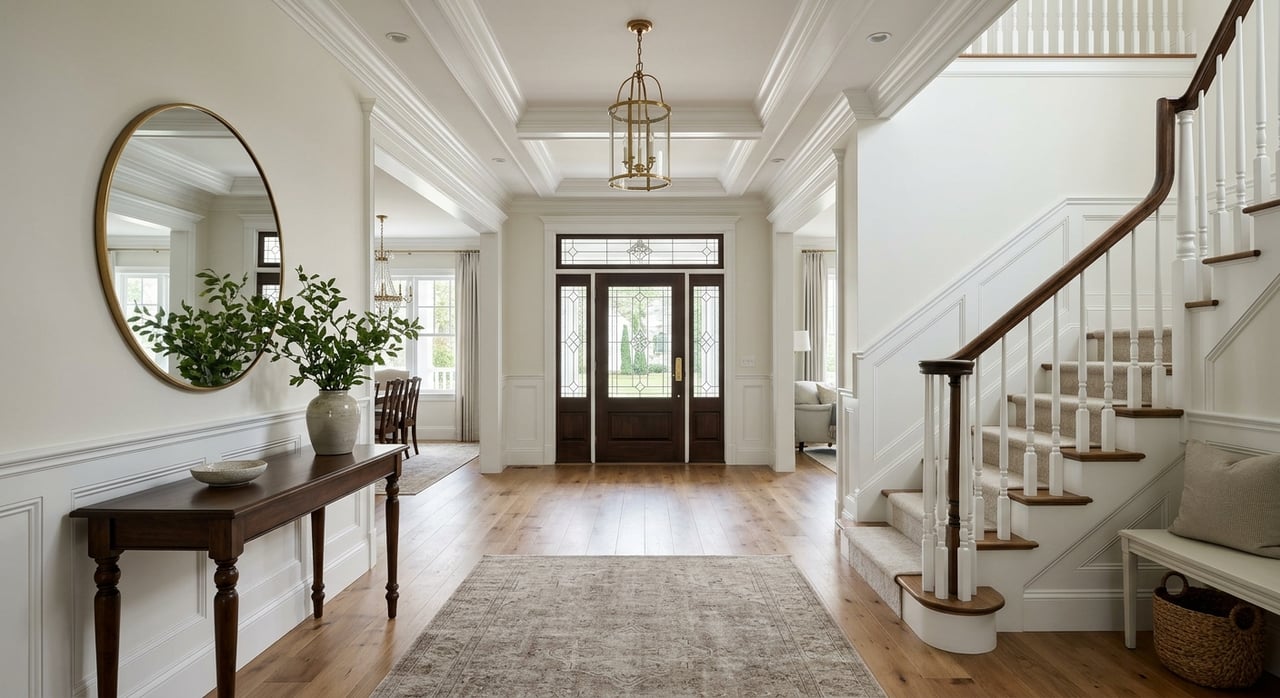
Wilton’s housing stock has a distinctly New England feel. According to the town’s historic survey, Colonial Revival is by far the most common style in town. You will also find New England Colonials, Capes, Farmhouses, Dutch Colonials, Tudor Revival homes, Mission examples, and other vernacular interpretations of earlier styles.
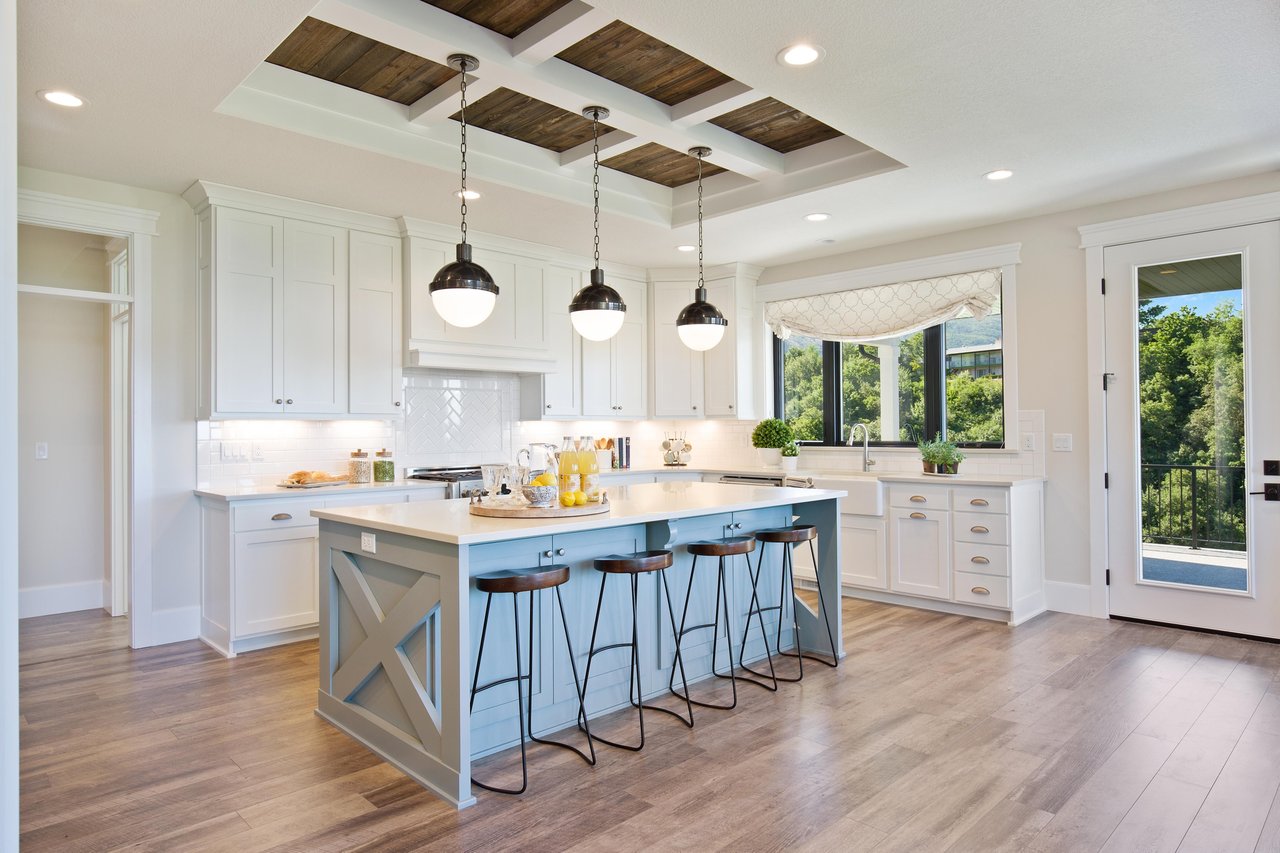
For NYC buyers, that often means a visual and lifestyle shift. Instead of prioritizing apartment layout efficiency or building amenities, you may be comparing lot size, yard use, privacy, and how an older or more traditional home fits your day-to-day needs. Architectural character is a real part of Wilton’s appeal.
What Higher Carrying Costs Mean
The biggest trade-off for more space is often cost. The research points to substantial local ownership costs, which is important if you are moving from a condo or co-op structure with a very different monthly expense profile. Even when purchase price is the headline number, your long-term comfort usually comes from understanding the full carrying picture before you buy.
That matters even more in a supply-constrained market. When inventory is limited and sale-to-list ratios run high, you may need to move quickly on homes that fit your budget and priorities. A clear plan can help you stay focused instead of stretching for a house that does not truly fit your needs.
Commute From Wilton to NYC
For many buyers, the commute is the make-or-break question. Wilton does offer rail access to Manhattan, but it is important to go in with realistic expectations. This is not the kind of town where most people can step out the door and rely on a fast, transit-first routine.
Wilton is served by Metro-North’s Danbury Branch. A representative weekday trip listed by the MTA leaves Wilton at 8:06 a.m., reaches South Norwalk at 8:26 a.m., departs there at 8:33 a.m., and arrives at Grand Central at 9:48 a.m. On that run, the total rail commute is about 1 hour and 42 minutes.
That timetable tells you two things at once. First, commuting into Manhattan is absolutely possible from Wilton. Second, it usually requires planning, transfers, and patience that feel very different from living in the city or in a closer-in suburb.
Driving and Regional Access
Driving is a major part of everyday life in Wilton. The town’s main artery is US Route 7, also called Danbury Road, which connects south to Route 15, the Merritt Parkway, and Interstate 95 in Norwalk. It also connects north toward Routes 33, 106, and 107.
That road network helps if your life is not centered only on Manhattan. Wilton can work well for people who split time between NYC, lower Fairfield County, Westchester, or nearby job centers. Still, the broader takeaway is simple: a car-dependent routine is more likely here than in many New York City neighborhoods.
Is the Commute Worth It?
That depends on what you want in exchange. If your priority is maximizing space, privacy, and a more suburban or semi-rural setting while keeping rail access to Manhattan, Wilton checks that box. If you want the shortest possible trip into the city or a lifestyle built around frequent walkable transit use, the trade-off may feel sharper.
Many NYC relocators find that the move makes sense when they are commuting less often than they once did. Hybrid work, flexible schedules, or a willingness to accept a longer ride can make Wilton much easier to picture as a long-term home base.
Lifestyle in Wilton
The day-to-day feel in Wilton is one of its biggest draws. The town combines historic character, open space, and a more rural visual landscape with access to the larger New York metro area. That balance is a big reason many buyers look beyond closer, denser suburban options.
Wilton also has a strong ownership profile and a school-centered structure that shape the rhythm of the community. Wilton Public Schools serves PreK through 12th grade across four schools: Miller-Driscoll, Cider Mill, Middlebrook, and Wilton High School, with about 3,715 students. For buyers comparing towns, that gives useful context on local infrastructure and how many households put down roots for the long term.
Open Space and Local Character
Wilton feels greener and older than many postwar suburbs. The town’s historical survey notes numerous historic districts and scenic roads, which helps explain its distinctive atmosphere. You are not just moving to a commuter town. You are moving to a place with a visible sense of landscape and history.
Weir Farm National Historical Park, located in Wilton and Ridgefield, adds to that identity. The park preserves the home, studios, and landscape associated with American Impressionist J. Alden Weir, spans 68 acres, and keeps its grounds and trails open daily year-round. For many residents, access to places like this becomes part of what makes everyday life feel more grounded and spacious.
How Wilton Feels Different From NYC
The biggest difference is not just house size. It is the shift in rhythm. Daily life in Wilton is less about immediate convenience and more about planning, driving, and using your home and outdoor space differently.
That can be a great fit if you want room to spread out, quieter surroundings, and a stronger sense of separation between work and home. But it helps to be honest about the adjustment. If you thrive on density, short errand runs by foot, and constant activity right outside your door, Wilton may feel slower in ways that take time to appreciate.
Who Wilton Fits Best
Based on the data, Wilton is often a strong match for buyers who want more space, access to public schools, and a suburban or semi-rural lifestyle without fully giving up Manhattan access. It can also appeal to buyers who value traditional home styles, open land, and a less conventional suburban feel. Those are meaningful strengths if your move is tied to a long-term lifestyle change.
The trade-offs are just as important. Wilton comes with higher carrying costs, a competitive inventory picture, and more car dependence than many city or inner-suburb buyers are used to. The right move is usually not about whether Wilton is objectively better or worse than NYC. It is about whether its trade-offs line up with the life you want next.
What to Consider Before You Move
Before making the leap, it helps to narrow your decision around a few practical questions:
- What is your true budget range? Wilton offers variety, but many single-family homes are in seven-figure territory.
- How often will you commute to Manhattan? A rail option exists, but the trip can be lengthy.
- Are you comfortable with a car-based routine? Driving is a meaningful part of daily life here.
- How much space do you actually want? More land and a larger home can be a major lifestyle upgrade, but they also change upkeep and costs.
- What matters most in your next chapter? Privacy, architecture, outdoor access, and a quieter pace are some of Wilton’s core draws.
A thoughtful relocation plan can make all the difference, especially when you are comparing Wilton not just to one NYC neighborhood, but to an entirely different way of living.
If you are exploring a move to Wilton or another Fairfield County town, working with a local advisor can help you compare housing options, commute realities, and neighborhood feel with more clarity. For tailored guidance and a relationship-first approach, connect with Sandra Calise Cenatiempo.
FAQs
What kind of homes can you find in Wilton, CT?
- Wilton includes a mix of attached homes, condos, and single-family houses, with Colonial Revival as the most common architectural style and additional Cape, Farmhouse, Dutch Colonial, Tudor Revival, and Mission examples found throughout town.
What is the typical price range for Wilton, CT homes?
- The market spans from some attached homes below $800,000 to many single-family homes in the seven figures, with a March 2026 median listing price of $1.175 million and an average home value of $1,251,800 reported by Zillow.
How long is the train commute from Wilton, CT to Grand Central?
- A representative weekday Metro-North trip from Wilton to Grand Central takes about 1 hour and 42 minutes, including a transfer at South Norwalk.
Is Wilton, CT a good fit for NYC commuters?
- Wilton can work for NYC commuters who want more space and are comfortable with a longer rail trip or regular driving, but it is less transit-oriented and more car-dependent than city living.
What is daily life like in Wilton, CT?
- Daily life in Wilton is shaped by open space, historic character, a suburban or semi-rural feel, and a school-centered community structure, with places like Weir Farm contributing to the town’s arts-and-nature identity.