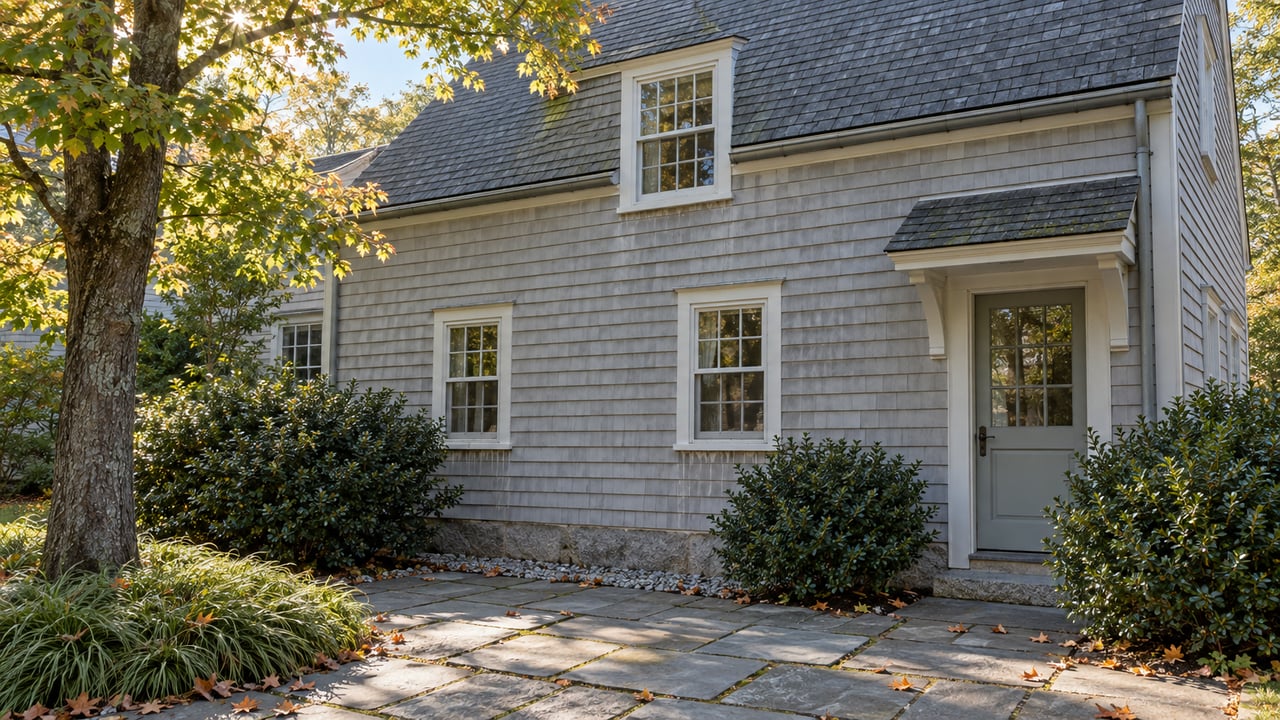
On December 10, 2025, Edward and Stacey Steinmetz filed for a Special Use Permit at 70 Cross Highway in Redding. Their agent, Tim Draper of T&M Lawn & Landscape in Bethel, was asking for something that sounds simple: a detached garage with an accessory apartment on the second floor. The Redding Zoning Commission opened a public hearing on the application January 14, 2026. It was continued January 28. Then it was cancelled February 11. Cancelled again February 25. Cancelled a third time March 11. By the time the commission's March 25 agenda went out, the application had been sitting in front of the town for three and a half months without a vote.
That timeline is not a story about a difficult project. A detached garage apartment is about as routine as accessory construction gets in Redding. It is a story about what "as of right" actually means once you cross into a town that decided the state's default rules did not apply to it.
What "As of Right" Was Supposed to Mean
In 2021, Connecticut passed Public Act 21-29, a zoning reform bill that set a statewide baseline for accessory dwelling units. The core promise was that a homeowner in a participating town could add an ADU without a public hearing, a variance, or a discretionary vote from a commission. The law gave municipalities an out, though: any town could opt out of the as-of-right framework by a two-thirds vote of its zoning commission and its governing body, as long as it acted before January 1, 2023.
Roughly two out of every three Connecticut towns took that option. Redding was one of them.
Opting out did not mean Redding banned accessory apartments. The Redding Zoning Commission's own page is explicit that the commission "regulates special use permits, accessory apartment permits, land clearing and re-grading permits, as well as residential and commercial uses and lot requirements." What it means in practice is that Redding kept its own rule, Section 5.12 of the town's zoning regulations, which routes every accessory apartment through a Special Use Permit application and a public hearing, the exact process PA 21-29 was designed to let homeowners skip.
The Hearing Isn't Always Slow, But It's Always There
The Steinmetz application is not the only accessory apartment case on record with the commission, and it is not representative of how every case goes. In October 2023, John Giardino and Donna Forshaw brought a Special Use Permit request to build a 966-square-foot modular home on their Lonetown Road property for Giardino's elderly father, after taking down an existing barn on the site. The public hearing opened at 7:43 p.m. on October 11. Commissioners asked about other approvals in progress, Giardino confirmed the health department was still reviewing the application, and the commission voted to approve the permit unanimously that same night.
A different accessory apartment application from that same evening, over a three-car garage for a homeowner's son and to house the owner when she visits, was still open for continued discussion rather than a same-night vote.
Put those two cases next to the Cross Highway timeline and the pattern isn't that Redding drags every ADU application out for months. It's that the town's process has no fixed clock. A straightforward case can clear in one meeting. A case that gets continued, even for scheduling reasons that have nothing to do with the merits of the project, can stretch across five separate meeting dates before a final vote. Anyone counting on a predictable permit calendar for an accessory apartment in Redding is counting on something the town's own record doesn't promise.
The Bill That Could Have Changed This Didn't Survive the Session
This year's legislative session gave Redding a chance to lose that discretion entirely. House Bill 5507, "An Act Concerning Accessory Dwelling Units," would have repealed the opt-out provision altogether, extending as-of-right ADU treatment to every Connecticut municipality regardless of what it decided back in 2022. The bill cleared the Planning and Development Committee with a favorable report and moved through Appropriations. It did not become law.
What did pass, out of a related but narrower bill, House Bill 5288, is now Public Act 26-7, and it addresses a specific piece of the ADU picture: utility connections. Effective October 1, 2026, the act updates how sewerage systems are defined when an accessory dwelling unit is added to a lot, and it extends existing protections against inflated utility connection fees to investor-owned water companies, not just municipal ones. That's a real and useful change for anyone who's already cleared the permitting hurdle and is now facing a water company's fee schedule. It does nothing to the hearing requirement itself.
So as of this week, the rule that sent the Steinmetz application through five meeting dates is still the rule. The broader reform that would have replaced it stalled in committee, and the piece of ADU legislation that did become law this session was never the piece that touches Redding's public hearing.
What This Means If You're Looking at a Redding Property for an In-Law Unit or Rental Income
Redding's housing market gives this permitting question some weight it wouldn't carry in a hotter market. As of September 2026, homes listed for sale in Redding carried a median price of $1.09 million, down 7 percent from September 2025, with a median of 56 days on the market. A slower, softer market rewards anything that differentiates a property, and an accessory apartment, whether it's framed as space for aging parents, adult children, or a long-term tenant, is one of the more direct ways to do that in a town built almost entirely around single-family lots.
The math on that upside depends on getting the unit approved on a schedule you can actually plan around, which is where the Special Use Permit process becomes a line item and not just a formality. A buyer weighing a property specifically for its ADU potential should build in calendar slack the way they'd build in a contingency for a home inspection. That means asking, before you're under contract, whether a detached or attached apartment is even a fit for the lot's setbacks and septic capacity, and treating the zoning commission's second-and-fourth-Wednesday meeting schedule as the real timeline, not the 8-to-16-week window that towns under the state's as-of-right framework typically see.
None of this is a reason to walk away from a Redding property with in-law or rental potential. It's a reason to sequence the decision correctly: confirm the zoning path with the town before you count on the apartment as part of the property's value, rather than after.
A Few Questions Worth Asking Before You Assume the State Law Applies
Does Public Act 26-7 change anything about the hearing requirement itself? No. The act that takes effect October 1, 2026 deals with how utility connections and sewerage system definitions apply to accessory dwelling units. Redding's Special Use Permit and public hearing process under Section 5.12 is untouched by it.
If HB 5507 comes back next session and passes, would that retroactively affect a permit already approved? That's a legal question specific to how any future act would be written, and it's outside what the public record answers today. Anyone with an active or planned application should raise it directly with the Redding Zoning Office.
Is there a way to skip the public hearing in Redding entirely? Not under the town's current regulations. Every accessory apartment application, attached or detached, goes through the Special Use Permit process, which by definition includes a public hearing before the Zoning Commission.
If an in-law apartment or a rental unit is part of why you're looking at a property in Redding, it's worth working through the zoning path before the offer, not after. Sandra Calise Cenatiempo can walk you through what a specific lot in Redding would actually require, and how to build that timeline into your plans from the start.