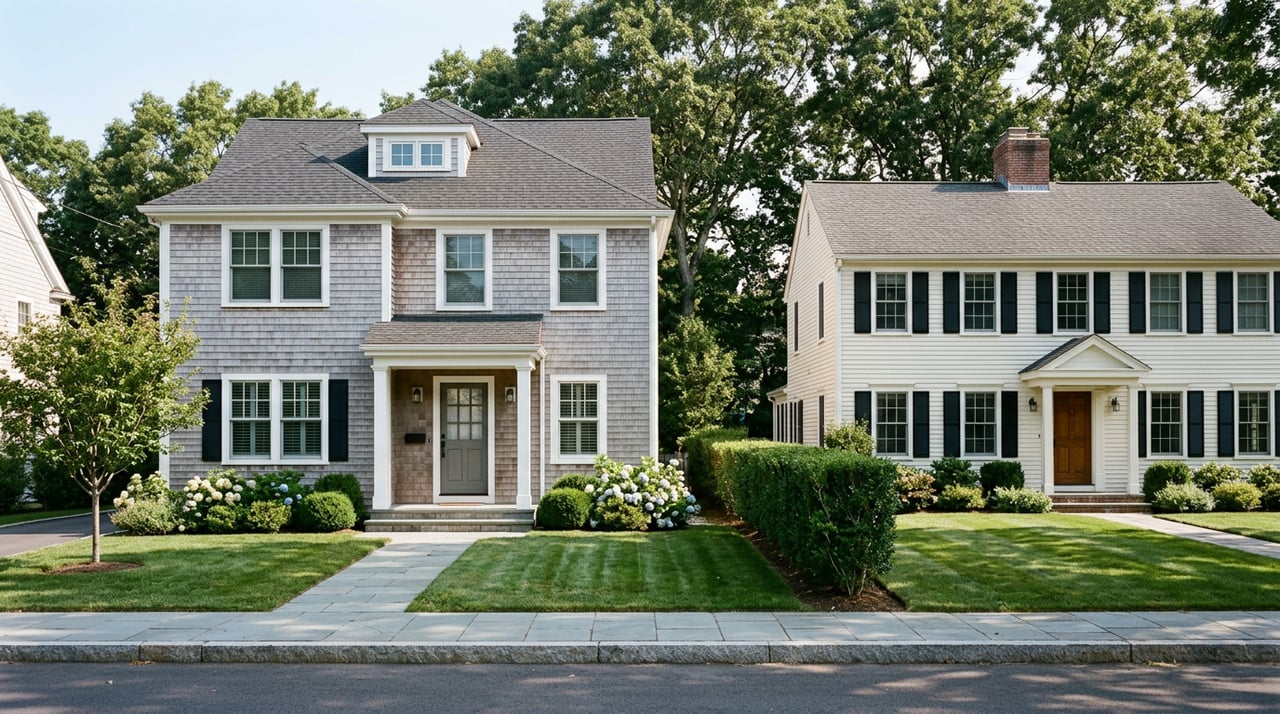
Torn between a low-maintenance condo and the space of a single-family home in Fairfield? You are not alone. Many buyers weigh convenience, costs, and lifestyle before deciding. In this guide, you will learn how the numbers work in Fairfield, what to expect from each option, and how to match your choice to your day-to-day life. Let’s dive in.
Fairfield market at a glance
Fairfield is a high-value coastal market with a typical home value around $914,364 and steady year-over-year growth. Inventory stays relatively tight, which keeps competition healthy. Single-family homes often sell in the high six figures to low seven figures depending on the neighborhood, while condos range widely from more affordable one-bedroom units into luxury waterfront options.
This price spread creates real trade-offs. A condo can offer a similar monthly cost to a lower-priced single-family home, but the ownership model is very different. Your total monthly number will depend on taxes, HOA fees, insurance, and maintenance.
What drives monthly cost
Property taxes in Fairfield
Connecticut towns tax property based on an assessed value equal to 70% of market value. You then apply the local mill rate to that assessed value to estimate annual taxes. Fairfield’s recent mill rate has been about 28.39 mills, and towns revisit rates each budget year. You can review Connecticut’s 70% assessment framework and check current local information through the town’s community page.
- CT assessment rule: assessed value equals market value times 70% (overview of Connecticut assessments).
- Fairfield mill rate context: recent budgets have used about 28.39 mills. Confirm the current rate with the town before you finalize numbers (Fairfield community page).
Example tax estimate: If a home’s market value is $500,000, the assessed value is $350,000. Using a 28.39 mill rate, tax equals 350,000 × 0.02839, or about $9,937 per year, roughly $828 per month. Property tax is one of the biggest recurring cost differences between a Fairfield condo and a single-family home.
HOA fees and what they cover
Condos add a monthly association fee, which usually covers exterior and common-area upkeep, landscaping, building insurance on common elements, snow removal, sometimes heat or hot water, and reserves for future capital projects. Amenities like a pool or clubhouse are often part of the package. Fees vary by community and what they include.
Local snapshots help show the range:
- A Fairfield Woods one-bedroom example on Katona Drive shows HOA around $343 per month, with heat and hot water included, and annual taxes near $3,692.
- Southport Woods townhomes run around the mid-$400s per month in HOA fees, with a pool, clubhouse, and paddle tennis.
- Some beach-adjacent condos along Fairfield Beach Road list HOA fees near the $200 range, with a walk-to-beach lifestyle.
The takeaway: a lower-fee condo may shift more utilities to you, while a higher-fee complex may bundle more services. Always read the budget and inclusions.
Insurance: HO-6 vs homeowners
Condo owners typically carry an HO-6 policy for the interior of the unit, personal property, and liability, while the association maintains a master policy for common areas and the building exterior. Coverage boundaries vary by community, so verify what the master policy covers and note the deductible and any loss-assessment requirements (condo insurance basics).
Single-family owners carry a homeowners policy that covers the structure, contents, and liability. Flood insurance is a separate policy if the property is in a mapped flood zone. Along the coast, flood premiums can be higher, so it pays to get a quote early.
Maintenance and reserves
With a single-family home, you control the exterior and all systems. Many homeowners budget roughly 1% to 4% of a home’s value per year for routine upkeep and periodic big-ticket items. On a $1.88 million Southport property, 1% would be about $18,800 per year. For condos, the association handles exterior and common-area work, but you still budget for interior maintenance and potential special assessments.
Special assessments
In a condo, major work like roof replacement or exterior restoration can trigger a special assessment if reserves are not fully funded. Before you buy, request the HOA budget, reserve study, meeting minutes, insurance documents, and the rules and regulations. These materials help you gauge future costs and ensure the community fits your lifestyle.
Lifestyle trade-offs in Fairfield
Space and privacy
A single-family home gives you a yard, fewer shared walls, and more control over exterior decisions, subject to local rules. In Fairfield’s higher-end pockets like Southport and beach neighborhoods, buyers pay a premium for space and privacy. Condos trade some privacy for convenience and lower exterior responsibilities.
Amenities and convenience
Many Fairfield condos include landscaping, snow removal, and community amenities such as a pool or clubhouse. Some beachside communities offer a walk-to-beach lifestyle. If you want lock-and-leave simplicity or shared amenities, a condo can deliver that.
Commute and walkability
Fairfield is served by multiple Metro-North New Haven Line stations. Proximity to the train, downtown dining, and the beach is a common reason buyers favor in-town condos and townhomes. Depending on the train, door-to-door times to Grand Central can often run in the 60 to 90 minute range (commute context).
Schools and community profile
Fairfield has an established owner-occupied community with stable neighborhood identities. If school zoning or a specific area is important to you, review town resources and maps and compare how each property type aligns with your goals. Use neutral, factual information to guide your decision.
Which fits your life
Move-up buyers
- You may prefer a single-family home for more bedrooms, yard space, and long-term flexibility.
- Budget for higher property taxes and a steadier stream of maintenance as lot size and home size increase.
- Compare your monthly total to a higher-amenity condo to see what best supports your lifestyle.
Downsizers
- A condo with one-level living and bundled services can simplify day-to-day life.
- Check whether utilities like heat or hot water are included, and review pet policies and any elevator access if that matters to you.
- A smaller single-family home near town can also be a fit if you want some yard without heavy upkeep.
Relocators
- If you prize predictable monthly costs and an easy commute, condos near the train and downtown are compelling.
- If you want a yard or a specific neighborhood setting, weigh single-family options and confirm parking, local rules, and access to highways or rail.
Real Fairfield cost snapshots
- Katona Drive condo example: HOA about $343 per month with some utilities included and annual taxes near $3,692. This shows how an HOA can offset certain utility costs.
- Southport Woods condo example: HOA in the mid-$400s per month with pool, clubhouse, and paddle tennis. Amenities add value and predictability to your monthly budget.
- Beach-adjacent condo example: Fees near the $200 range in some listings along Fairfield Beach Road. Consider separate utility costs and potential flood insurance.
- Southport single-family example: Historic village and harbor-area homes frequently trade in the $1.5 million to $3 million range, with higher annual property taxes and larger maintenance budgets to match. Some individual examples show taxes above $25,000 per year.
These are representative snapshots. Always confirm current list prices, tax records, fees, and inclusions before making an offer.
Smart due diligence checklist
- Get the HOA budget, latest financials, reserve study, and the last 12 to 24 months of meeting minutes. You are checking for planned projects, reserve strength, and any legal or collection issues.
- Review the master insurance policy and deductible, then match your HO-6 coverage accordingly (condo insurance overview).
- Verify FHA or VA eligibility if you plan to use those loans by checking the project on HUD’s condo lookup (HUD condo approval search).
- Confirm flood map status for homes near the shore or marsh and get both NFIP and private flood quotes if applicable (Fairfield County DFIRM info).
- Confirm the current assessed value and tax history with the town and note the latest mill rate before you finalize monthly costs (Fairfield community page).
- For single-family homes, ask for ages of the roof, HVAC, and major systems, plus recent capital work. Use that to set a realistic annual maintenance budget.
How to choose with confidence
If you want space, privacy, and long-term flexibility, a single-family home likely fits your plan. If your priority is convenience, predictable monthly costs, and easy access to town or the train, a condo may be the better match. In Fairfield, the biggest monthly differences usually come down to property taxes, HOA fees and inclusions, insurance, and how much maintenance you want to manage.
If you would like a local, pressure-free sounding board, reach out. As you compare a few real listings side by side, you will see quickly which option supports your daily life and budget.
Ready to narrow your options in Fairfield and nearby towns with a clear plan? Connect with Sandra Calise Cenatiempo for thoughtful, local guidance from search to closing.
FAQs
How do you estimate Fairfield property taxes on a home purchase
- Multiply market value by 70% to get assessed value, then multiply by the town’s mill rate divided by 1,000. Fairfield’s recent rate has been about 28.39 mills, but confirm the current figure before you finalize numbers (assessment overview).
What do Fairfield condo HOA fees usually cover
- Most include exterior and common-area upkeep, landscaping, snow removal, a master insurance policy, management, and reserves. Some communities include heat or hot water, which can offset utility costs.
Do Fairfield beach-area homes and condos need flood insurance
- If a property is in a special flood hazard area, lenders usually require flood insurance. Check maps and get quotes early, especially near the coastline (DFIRM map info).
Are condos harder to finance than single-family homes in Fairfield
- Some loan programs require the condominium project to meet specific approval standards. If you are using FHA or VA financing, verify the project on HUD’s condo lookup before you write an offer (HUD condo approval search).
What is the commute like from Fairfield to NYC
- Fairfield has multiple Metro-North stations, and trips to Grand Central often run about 60 to 90 minutes depending on the train pattern. Living closer to the station can reduce total door-to-door time (commute context).